
Pygmy Goats
August 21, 2012 by pwadmin
Filed under Goat Breeds
National Pygmy Goat Association (NPGA) Breed Standard
The Pygmy Goat is genetically small, cobby and compact. It is full-barreled and well-muscled, the body circumference in relation to height and weight is proportionately greater than that of other breeds. Mature animals measure between 16 and 23 inches at the withers (shoulder blades to ground). Head and legs are short relative to body length. Genetic hornlessness is considered a disqualifying fault. However, disbudded (dehorned) or horned goats are acceptable.
Preferred colors range from white through black with gray agouti being predominant. Muzzle, forehead, eyes and ears are accented in lighter tones. Front and rear hoofs and cannons (socks) are black, as are the crown and dorsal stripe. Random markings are acceptable in limited amounts and characteristics locations. Coat length and density vary with climates, making the Pygmy Goat equally at home in the desert or in the northern
tundra.
Pygmy goats should reflect the following breed characteristics:
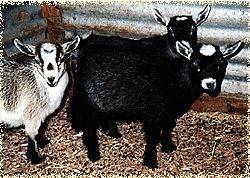 Coat – The full coat of straight, medium-long hair which varies in density with seasons and climates. On females, beards may be non-existent., sparse, or trimmed. On adult males, abundant hair growth is desirable; the beard to be full, long and flowing, the copious mane draping cape-like across the shoulders.
Color – All body colors are acceptable, the predominant coloration is a grizzled (agouti) pattern produced by the intermingling of light and dark hairs, of any color. See recognized color choices below.
CARAMEL PATTERNS
All have light vertical stripes on front side of darker stockings. Muzzle, forehead, eyes and ears accepted in tone lighter than the darker portion of the body.
- LIGHT CARAMEL
- White or caramel hairs, intermingled with white in the undercoat making the top coat color appear to be a shade of pure white to cream.
- MEDIUM CARAMEL
- Caramel and white hairs intermingled in the undercoat making the top coat a shade of apricot.
- DARK CARAMEL.
- White hairs intermingled with darker caramel/buff or brown hairs in the undercoat making the top coat a shade close to a medium tan.
- BROWN CARAMEL
- Brown mainly with only occasional intermingled white hairs in the undercoat making the topcoat a pronounced darker brown.
AGOUTI PATTERNS
All agoutis have solid stockings darker than main body color. Muzzle, forehead, eyes, and ears accented in tones lighter than the dark portion of the body.
- LIGHT GRAY AGOUTI
- Black and white hairs intermingled with slightly more white hairs to give a light Greg color, making the topcoat silver in shade.
- MEDIUM GRAY AGOUTI
- Black and white hairs intermingled in equal amounts giving the topcoat a blacker appearance close to an equal amount of salt and pepper.
- DARK GRAY AGOUTI
- Darker Greg appearance with fewer white hairs, but still a salt and pepper appearance that is pronounced.
- BLACK AGOUTI
- Black mainly with only occasional intermingled white hairs.
- LIGHT BROWN AGOUTI.
- Light / silver Greg hairs intermingled with white and with brownish tips to main body hairs, making the topcoat appear a burnt silver shade.
- MEDIUM BROWN AGOUTI
- Brown and white hairs intermingled in equal amounts giving the topcoat a browner salt and pepper appearance.
- DARK BROWN AGOUTI
- Brown hairs intermingled with fewer white hairs, but still a salt and pepper appearance that is a pronounced darker brown.
- BROWN AGOUTI
- Brown mainly with only occasional intermingled white hairs.
BLACK PATTERNS.
All blacks have solid black stockings.
- BLACK
- Solid black except for muzzle, forehead, eyes, and ears accented in tones lighter than the darker portion of the body.
- SOLID BLACK
- All black with no lighter accented areas.
Markings –
A. Breed-specific markings are required: muzzle, forehead, eyes, and ears are accented in tones lighter than the dark portion of the body in goats of all colors, except goats that are solid black. Front and rear hoofs and cannons (socks) are darker than main body coat, as are the crown, dorsal stripe, and martingale; except in goats that are solid black. On all caramel goats, light vertical stripes on front sides of darker socks are required.
B. Optional markings: light areas (on darker backgrounds) that appear as complete or partial girth belts are acceptable.
Source: NPGA’s PYGMY GOAT BASIC OWNERS MANUAL

American Goat Society (AGS) Breed Description
The AGS Pygmy is a milk goat about the size of the Nigerian, but with the dwarf-like proportions of short legs (especially in the cannon bones), short but large head, and lots of width, especially in the barrel – to the point where does look perpetually pregnant. The Pygmy head is wide between bright, prominent eyes and in the chest between the legs. It is shorter and cobbier than the Toggenburg and carries more muscling than any other breed. The width and depth of body compared with height are greater than the other breeds, giving it a very angular appearance. Light colored Pygmies often have darker legs, dorsal stripe, and martingale; and dark colored Pygmies often have light etching on the ears, crown, muzzle and eye rims. The coat is full, heavy and medium length. All colors are acceptable..
ORIGIN: West Africa
Visit our Breeds & Breeding forum section and our milking section!
Nigerian Dwarf Goats
August 21, 2012 by pwadmin
Filed under Goat Breeds
Comments Off on Nigerian Dwarf Goats
Colorful, Miniature Dairy Goats
Little Goats with a Big Future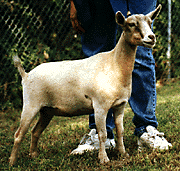
One of the biggest dairy goats in terms of popularity is the smallest in stature. These knee-high ambassadors for dairy goats are enjoying rising popularity due to their miniature size and colorful markings. They have carved out a unique niche as a multi-purpose miniature goat: a wholesome source of caprine dairy products for family or homestead farm consumption with universal appeal as loveable, gentle pets, “living lawn ornaments” and weed control.
History and General Information
The Nigerian Dwarf goat is a miniature dairy breed of West African origin. Their small stature means that they do not require as as much space as their larger dairy goat counterparts and their gentle, friendly personalities make them good companion pets and easy to handle – even small children can be at ease with these little goats. Nigerian Dwarfs are still considered “rare” by the American Livestock Breeds Conservancy, with their numbers totaling about 7,000 in the national registries.
A healthy Nigerian Dwarf doe can produce a surprising amount of sweet milk for her small size – up to two quarts per day. In addition, Nigerian Dwarf milk is higher in butterfat (6-10%) and higher in protein content than most dairy breeds. However, many Nigerian Dwarf owners do not raise their goats for milk but for the pleasure and companionship that these little caprines bring to their lives.
Nigerian Dwarfs vs. Pygmies
Although they have similar origins, Nigerian Dwarfs and African Pygmies are separate and distinct breeds. Pygmies are bred to be “cobby” and heavy boned. Dwarfs are bred to have the length of body and structure in proportion to their larger dairy goat counterparts. Pygmies are also primarily “agouti,” with black, silver and caramel being the most common colors. There is no color discrimination among Nigerian Dwarfs under AGS (American Goat Society) registry. Under NDGA (Nigerian Dwarf Goat Association) registry policy, pygmy coloration and pattern is a minor fault.
Nigerian Dwarf Coloring
Color is one of the factors that makes breeding Dwarfs so popular. You can never be sure what color the babies will be until they are born; even then you can’t be sure because many times their color will change. Main color families are black, chocolate and gold with virtually every color combination imaginable being produced. Dwarfs can be Dalmatian spotted, pinto-patterned, tri-colored or just classy shades of solid jet black, white, chocolate or gold. Buckskin patterns are also popular, described by contrasting facial stripes, a “cape” around the shoulders with coordinating leg markings. Brown eyes are most common; however, dwarfs with china blue eyes are becoming increasingly available.
Nigerian Dwarf Breed Standards
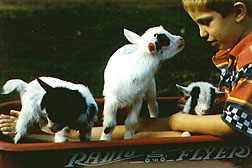 A Nigerian Dwarf goat’s conformation is similar to that of the larger dairy goat breeds. The parts of the body are in balanced proportion. The nose is straight, although there may be a small break or stop at the level of the eyes. The ears are upright. The coat is soft with short to medium hair. Any color or combination of colors is acceptable. The AGS breed standard sets the maximum height for does at 22.4″ with bucks up to 23.6″. NDGA maximum heights for does and bucks is 21″ and 23″, respectively. There is no minimum height; although NDGA specifies an “ideal” height between 17″ and 19″ for does and 18″ to 20″ for bucks. Animals are disqualified from the show ring for being oversized for the breed standard and/or having a curly coat, roman nose, pendulous ears or evidence of myatonia (this is associated with fainting goats.)
Nigerian Dwarf Temperament
Dwarf goats are gentle and loveable. Their calm, even temperament and engaging personalities make them suitable companions for all, including children, the disabled and the elderly. Even breeding bucks are handled easily. Because of their gentle temperaments, Nigerian Dwarfs make wonderful pets and great animal projects for children and young adults in FFA and 4H. Breeders of other types of goats find that their Dwarfs blend in with the rest of their herd and do not need special quarters; just adequate fencing to contain them because of their small size. Many Nigerian Dwarf goats share pastures peacefully with other livestock such as cattle, horses, llamas, and donkeys.
Nigerian Dwarf Housing
For one to just a few goats, many owners find that an oversized dog house or two does the job. For a few to several goats, a small barn or loafing shed can be used depending on the climate. Good ventilation and dry quarters is important for healthful Nigerian Dwarf care. Many owners find that providing a few “toys” for their goats provides them with hours of caprine entertainment. Tree stumps, rocks or empty cable spools are great for “king of the mountain” games and jumping.
Nigerian Dwarf Breeding
Dwarf goats breed year round. Many breeders breed their does three times in two years, giving the doe at least a six month break. Of course, this is a personal choice for each breeder. For the most part, Nigerian Dwarfs are a hardy breed with few kidding problems. New babies average about 2 lbs. at birth but grow quickly. Does can be bred at 7- 8 months of age if they have reached a good size. Some breeders prefer to wait until they are at least 1 year or older. Dwarf does can have several kids at a time, 3 and 4 being common and sometimes even 5! Dwarfs are generally good mothers able to take care of their babies should you leave them to do the raising of the kids. They can also provide a surprising amount of milk for their size if you decide you want your own delicious goat milk.
Bucks are able to be used for service as young as 3 months of age and easily by the time they are 7 or 8 months old. Because they can be fertile at such a young age, breeders are advised to wean does and bucks separately. Dwarf bucks are vigorous breeders but are gentle enough to be used for hand breeding or pasture breeding. Both methods are used successfully.
Cost
Average cost for registered breeding stock is $200 to $500, with champion pedigrees, milk production record animals and unusual coloring receiving premium prices. Pet quality stock often costs much less, and wethers (neutered males) can be purchased for around $50 to $100.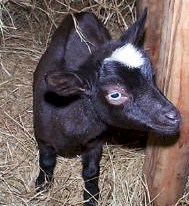
Visit our Breeds & Breeding forum section and our milking section!